The training
What is Jumping Fitness?
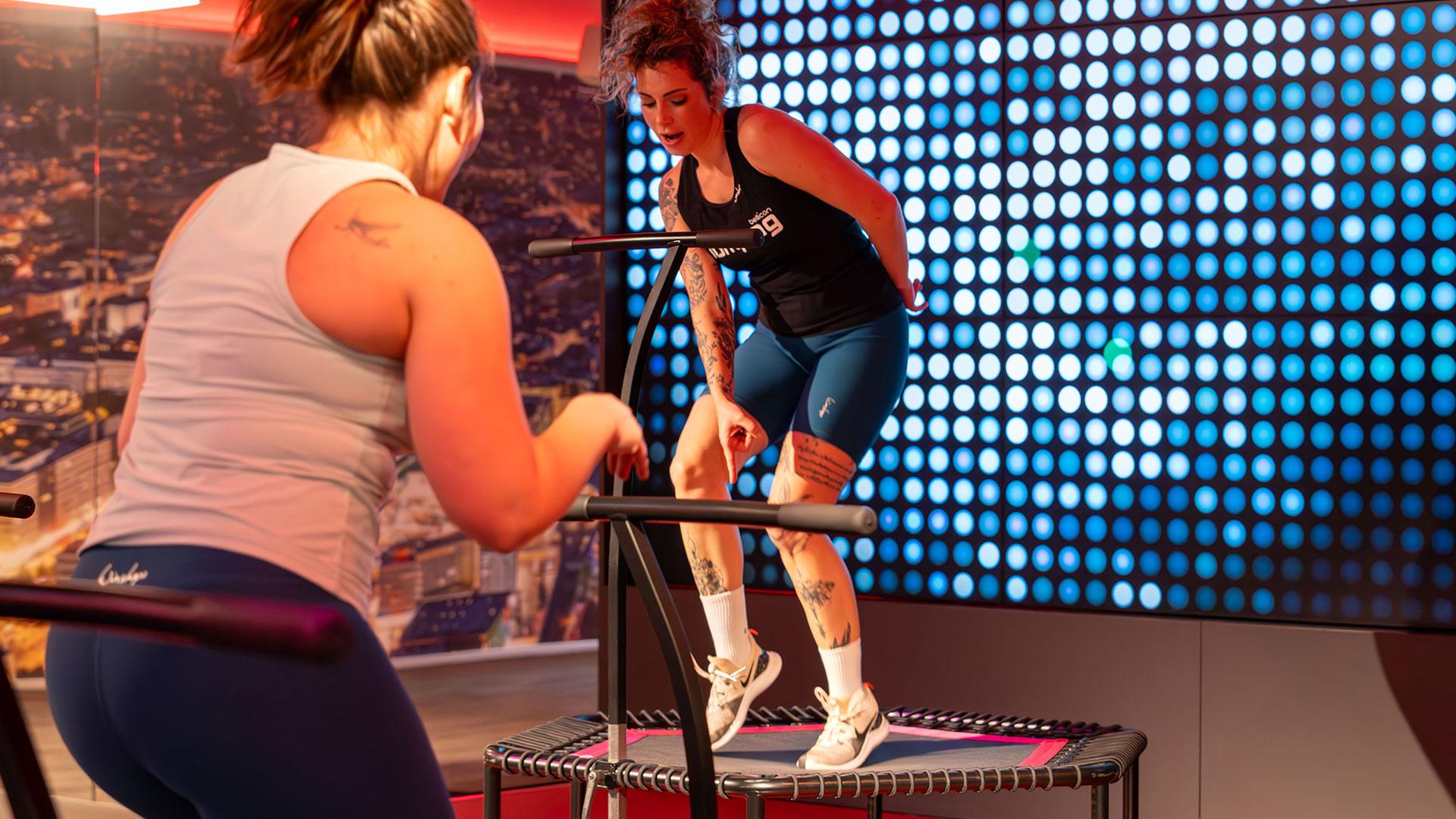
Jumping Fitness is group training on a trampoline. An instructor takes the class through an hour set to music, with everyone standing on their own bellicon. The training does not come from jumping high but from controlled movement into the jumping mat. The concept combines endurance, strength, coordination and balance in one session.
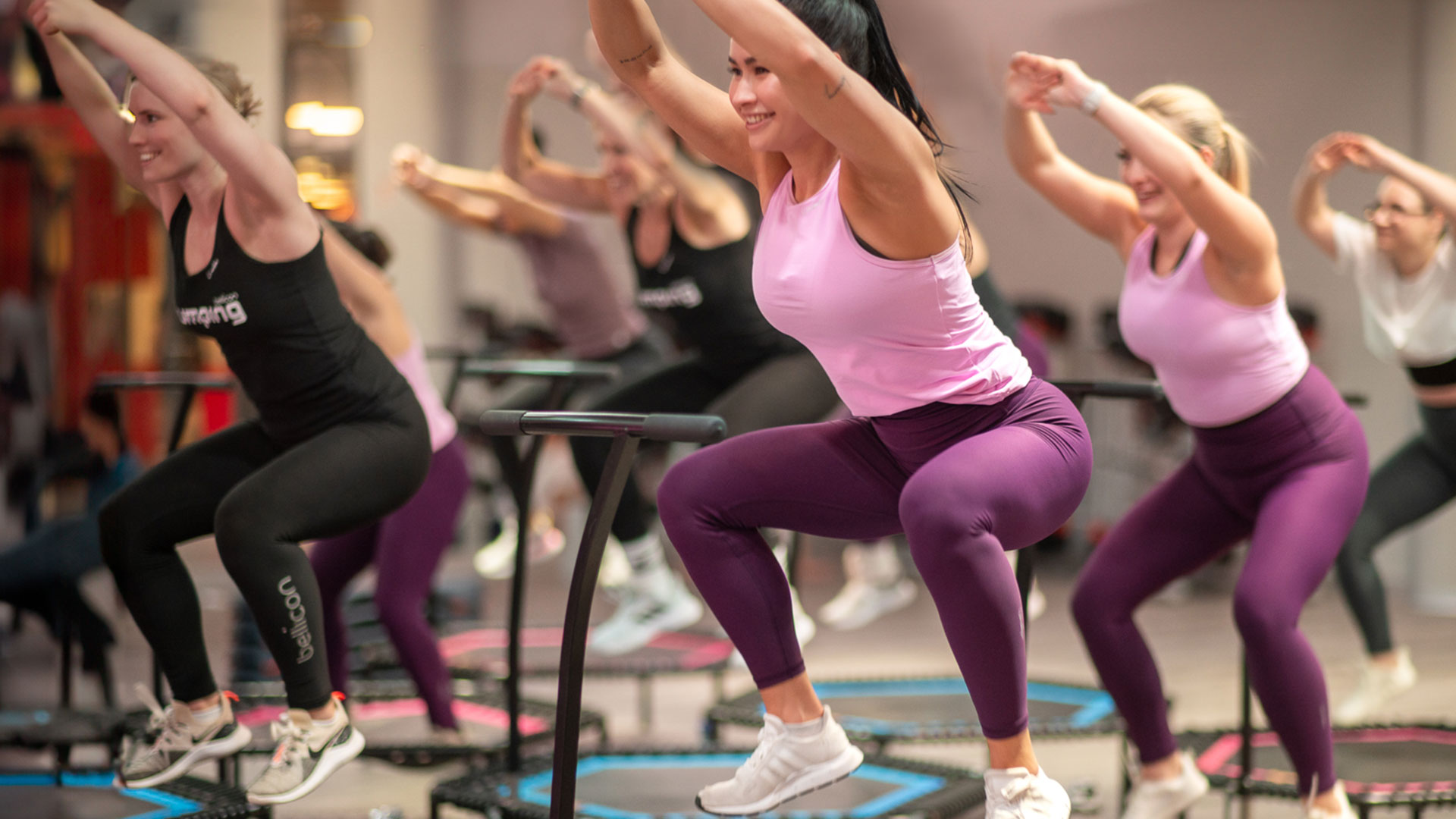
The concept was developed in 2014. To build it, the exercises known until then were taken apart and examined individually for every health aspect before they became a class format.
How a Jumping Fitness class runs
Warm up in two parts
The body gets moving, the basic position is taken up, you get a feel for the mat.
Main part
The basic steps run here, combined into sequences and in time with the music. Depending on the class format, intervals, arm work or additional elements come in.
Toning
A section for the muscles, often arms and core, on and at the trampoline.
Cooldown in two parts
Coming down, stretching, lowering the pulse.
Between the blocks there are what you might call rest steps. If you need to get your breath back, you move into a calmer step and stay in motion. That is deliberately built in, not a break.
The basic position is what matters most
Jumping Fitness lives on the correct posture, not on how high you jump. It is the part taught first in every instructor training:
- A stable stance, with the whole surface of your feet, hip-width apart, on the horizontal centre line of the trampoline.
- Pelvis tilted very slightly forward, knees slightly bent, upper body leaning slightly forward. The alignment of the body is reminiscent of a light squat.
- The back stays in its natural shape. Arching the lower back is avoided.
- The navel is actively drawn towards the spine. The upper body is fixed but not tense, and no tension is created in the neck.
- Breathing keeps going. Holding your breath is the most common mistake.
- The knees are drawn towards the upper body and the feet set down again at the starting point, in time with the music.
The decisive part: do not jump upwards. It is not about reaching the ceiling with your fingers but about working in a controlled way into the jumping mat. The soft landing on the trampoline prevents compression of the joints.
Holding that position all the way through is not possible at the beginning, and that is normal. That is what the rest steps are for.

Who Jumping Fitness suits
The training works across fitness levels because it uses levelling: the same exercise is intensified or eased so that everyone reaches their own limit rather than the group’s.
Classes bring together people with very different backgrounds: footballers, endurance runners, dancers, strength athletes, and people who normally avoid sport.
If you have a pre-existing condition, are pregnant, or are coming back from an injury, get medical advice first. That holds for any sport.
What the training asks of you
Jumping Fitness is a full-body workout. It asks for the legs, the core and, depending on the class format, the arms and shoulders as well. Because the jumping mat gives way, the body has to stabilise continuously, and that is exactly where the demands on coordination and balance come from.
The deep musculature works along with it. With the correct basic position and an engaged core, the pelvic floor muscles are involved, as in any training done with body tension. The most common mistake in this context is uncontrolled jumping upwards combined with held breath. Neither belongs in a Jumping class.
Why a bellicon and not any trampoline
Classes run on the bellicon Jumping Fitness Pro. The suspension consists of rope rings with synthetic rubber inside, the jumping mat is woven from non-slip Permatron, and the handlebar height is set with a patented quick release. The full story is in the post How the Jumping Fitness trampoline became a bellicon.
How to get started
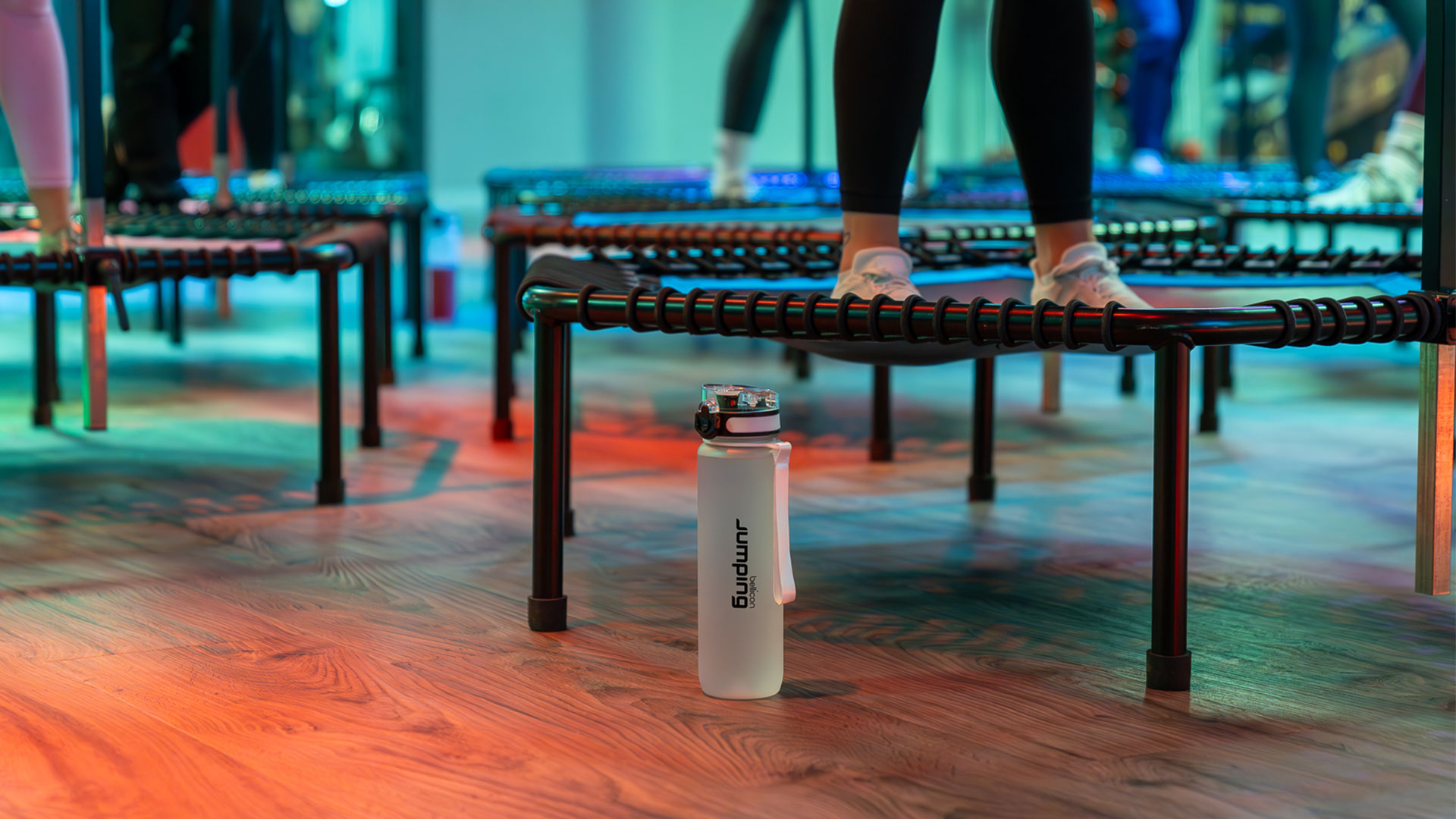
The simplest way is a trial session at a studio that offers Jumping Fitness. One hour is enough to tell whether the training suits you. Bring sportswear and something to drink, the trampolines are at the studio.
If you need a push to start, the post 7 tips to get you motivated to train may help. How often training a week makes sense and how to combine different types of training is covered in A sporty combination. On eating around training there are healthy snacks for in between and the optimal sports nutrition.
Becoming a Jumping Fitness instructor
Anyone who wants to teach takes the instructor training through the bellicon Academy. For studios and instructors there are trainings, class concepts, choreographies and music, plus equipment packages. What comes after the training is told by an instructor in the post What happens after the instructor training.
If you run a gym and want to offer Jumping Fitness as a class format, the conditions are set out under Offering Jumping Fitness in your gym.
Common questions
What does Jumping Fitness do for you?
It trains endurance, strength, coordination and balance in the same hour. Because the mat gives way, the body has to stabilise constantly, and that is where the demands on coordination and balance come from. The landing is softer than on firm ground, because the mat absorbs the impact.
Can you lose weight with Jumping Fitness?
Whether someone loses weight is decided by energy balance over weeks, not by a single sport. A Jumping class is endurance training and uses energy like other endurance sports do. We deliberately quote no calorie figures: they depend on body weight, intensity and class format, and any number here would be a guess.
Is Jumping Fitness better than running?
It is different, not better. Both are endurance training. The difference is the surface and the format: when you run, nothing gives way; on the trampoline the mat absorbs the impact. In return, Jumping runs to music, in a group, with an instructor who corrects you. Which one fits depends on what you are looking for.
Do I need to be fit to start?
No. Levelling makes every exercise easier, and the rest steps are part of the concept. One trial class is enough to tell whether the pace works for you.
How high do you jump?
Not high. You work into the mat in a controlled way, not upwards.
How often per week makes sense?
That depends on what else you do and how well you recover between sessions. How different kinds of training combine is covered in A sporty combination.
What are the drawbacks?
Three things worth knowing beforehand. First, the training lives on the basic position; if you do not hold it, you are not training properly, which is exactly why it is corrected in every class. Second, it is a group format with fixed music and a fixed beat, which does not suit everyone. Third, you need a studio with the right equipment, or a rebounder of your own at home.
Do I need special shoes?
Bring sportswear and something to drink. What is usual in terms of footwear differs from studio to studio; your instructor will tell you before the first class.
Can I train at home as well?
Yes, the rebounder can be used at home as well. The class format itself is group training.
Where do I find a class near me?
Studios offering Jumping Fitness are marked on a location map.
I have a pre-existing condition, I am pregnant, or I am coming back from an injury.
Then clear it with a doctor first. That applies to any sport, and we give no recommendation from a distance.